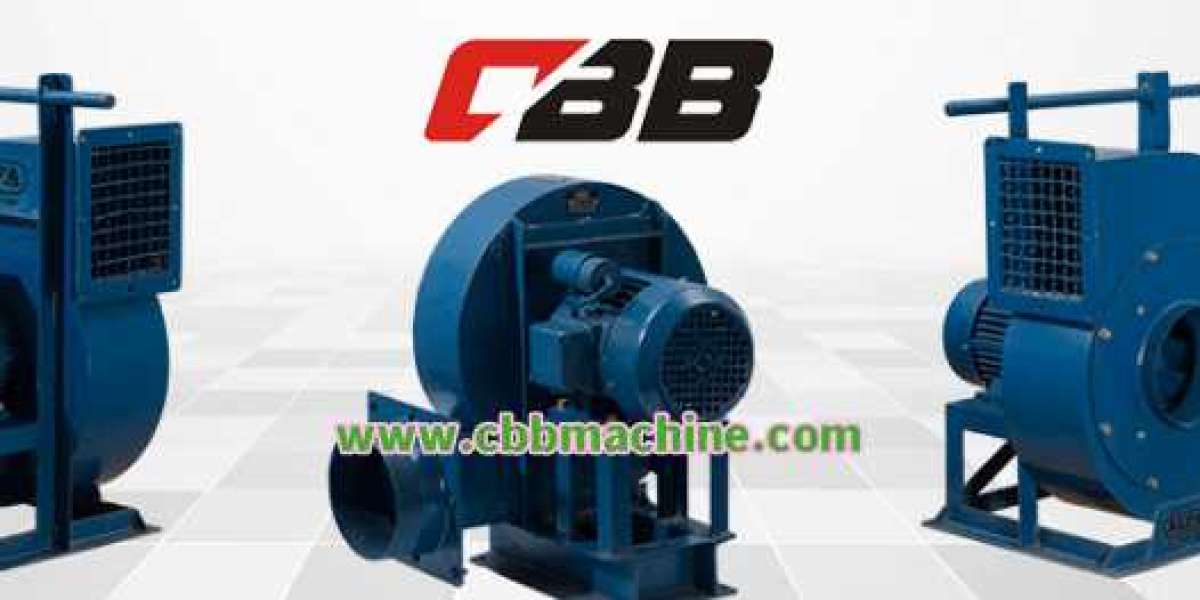

Air circulation is an essential part of many industrial operations, from equipment cooling and workshop ventilation to material processing and environmental control. A Centrifugal Blower offered by Cbbmachine provides a mechanical solution for moving air through connected systems where controlled airflow and stable pressure are required. Its operating structure makes it suitable for applications that depend on directed air movement, helping manufacturers maintain appropriate working conditions and support the performance of related equipment.
Unlike ordinary ventilation fans that primarily move air within an open space, centrifugal equipment uses rotational motion to draw air into its housing and discharge it through an outlet. As the impeller rotates, air enters near the center and moves outward under centrifugal force. The surrounding housing then guides the airflow toward the discharge connection. This operating principle allows the equipment to work with ducting, filtration units, and other components in integrated air handling systems.
One important application is industrial ventilation. Manufacturing workshops often generate heat, dust, fumes, or airborne particles during production. A suitable air movement system helps transport unwanted air away from working areas and supports the circulation of fresh air. When combined with appropriate filtration or exhaust equipment, the blower can become part of a broader environmental management arrangement.
Cooling is another relevant application. Certain industrial machines generate heat during continuous operation, making effective air circulation important for managing operating temperatures. Directed airflow can help remove accumulated heat from equipment housings, electrical enclosures, and processing areas. The actual cooling effect depends on system configuration, airflow requirements, installation conditions, and the characteristics of the surrounding environment.
Centrifugal equipment also has a role in material processing. Some production systems require air to assist with drying, conveying, combustion support, or other specialized procedures. In these situations, airflow needs to match the process requirements rather than simply provide general ventilation. Understanding the material characteristics and operating environment helps determine an appropriate equipment configuration.
Structural design is an important consideration when evaluating industrial air movement equipment. The impeller, motor, housing, shaft, and supporting components work together during operation. Their construction influences airflow characteristics, mechanical stability, noise behavior, and maintenance requirements. Buyers should consider the working environment and intended application when reviewing housing materials, impeller structure, motor compatibility, and connection arrangements.
Installation planning deserves equal attention. The equipment should be positioned to allow suitable air intake and discharge while maintaining convenient access for inspection. Duct dimensions, bends, filters, dampers, and other connected components can influence airflow resistance. An appropriately designed system helps the blower operate within its intended working conditions and reduces unnecessary pressure losses.
Maintenance is another part of long-term equipment management. Dust accumulation, impeller contamination, loose connections, bearing wear, and unusual vibration may influence operating conditions. Regular inspection and cleaning can help identify potential issues and maintain the condition of important components. Operators should follow the manufacturer's maintenance instructions and ensure that electrical and mechanical servicing is carried out under appropriate safety procedures.
When selecting equipment for a new installation or an existing production line, manufacturers should begin with the actual air handling requirements. Air volume, static pressure, transported medium, temperature conditions, installation space, and operating schedule all influence equipment selection. Sharing these details with a qualified supplier can make technical communication clearer and help identify a configuration suited to the intended application.
Industrial airflow is rarely an isolated requirement. It connects ventilation, cooling, environmental management, and production processes into a coordinated operating system. Choosing suitable equipment is therefore an opportunity to improve how these systems work together.
If your next engineering project calls for a fresh approach to industrial air movement, let curiosity guide your next visit. Head to https://www.cbbmachine.com/product/ , browse the available machinery information, and see which product details could inspire your next equipment decision. Sometimes, a better production environment begins with looking at airflow from a different angle.