
Modern mechanical equipment requires components that can handle movement while maintaining suitable contact with surrounding surfaces. In applications involving sliding structures, conveying systems, and industrial machinery, a Rubber Bearing Roller can provide a practical combination of rolling support and surface cushioning. With attention to material selection, component structure, and application requirements, Hunepulley offers hardware solutions designed for different mechanical environments and equipment configurations.
The combination of a rubber outer surface and an internal bearing gives this type of roller its distinctive functionality. The rubber layer provides a contact surface with useful elasticity, while the bearing supports rotational movement around the central axis. Together, these elements can help reduce direct contact noise, absorb minor vibrations, and facilitate smoother movement when the component is properly matched with its working conditions.
Rubber material selection plays an important role in product performance. Different rubber compounds have different levels of elasticity, hardness, abrasion resistance, and environmental adaptability. Some applications require a softer surface to provide cushioning, while others need a firmer material to maintain dimensional stability under repeated contact. Temperature, moisture, friction, and exposure to surrounding substances should also be considered when choosing an appropriate material.
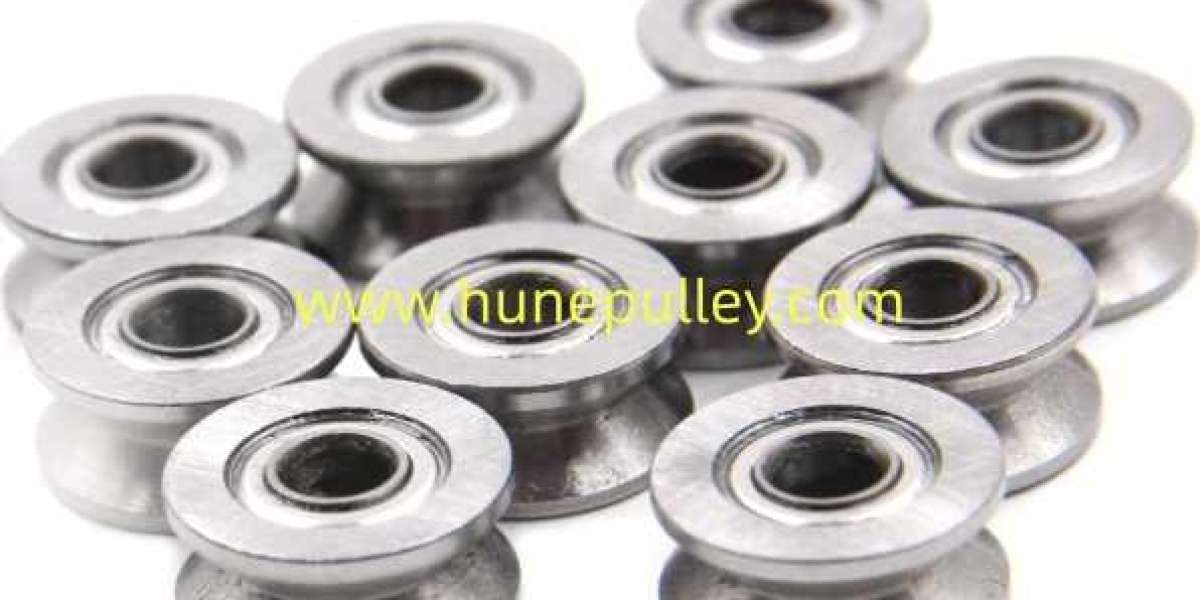
The bearing structure is equally important. Its internal arrangement influences rotational resistance, alignment, and the way the roller responds during operation. A suitable bearing helps the wheel rotate around its axis while supporting the intended mechanical load. Proper fitting between the bearing and rubber body also contributes to assembly stability and consistent movement. Manufacturers should consider these elements together rather than evaluating the outer material alone.
Another important factor is roller geometry. Outer diameter, overall width, rubber thickness, and shaft dimensions affect compatibility with different mechanical systems. The contact surface may also require particular shapes depending on the equipment structure. Selecting suitable dimensions helps ensure that the roller fits its mounting position and interacts appropriately with the corresponding track or surface.
These components have applications across several industries. Furniture hardware manufacturers may use rubber-covered rollers in sliding structures where quieter movement is desirable. Industrial equipment can incorporate them into guiding mechanisms, movable platforms, and material-handling assemblies. Certain machinery designs also use cushioned rollers to help manage contact between moving components. Each application requires an appropriate balance between load capacity, surface characteristics, and rotational performance.
For product manufacturers and distributors, consistent production quality is an important part of sourcing decisions. The rubber body should maintain its intended shape, while the bearing needs appropriate positioning within the assembly. Attention to molding processes, bonding methods, dimensional control, and final inspection can help support product consistency. These considerations also contribute to smoother installation and more predictable equipment operation.
Customization can provide additional flexibility when standard roller designs do not meet specific project requirements. Depending on the application, adjustments may involve rubber hardness, material composition, wheel dimensions, bearing type, or mounting structure. Providing detailed information about the working environment and equipment configuration helps clarify the technical requirements and supports more suitable product selection.
Maintenance should also be included in equipment planning. Regular checks of the rubber surface, bearing rotation, mounting condition, and alignment can help identify wear or deformation. Cleaning the contact area and following appropriate installation guidelines can support continued functionality. The inspection process should reflect the actual operating environment and the characteristics of the selected materials.
As mechanical designs continue to emphasize quieter movement, flexible structures, and practical component integration, rubber-covered bearing rollers remain relevant to a wide range of applications. Their usefulness comes from the coordination of elasticity, rotational support, structural compatibility, and material durability.
Sometimes, improving a moving mechanism begins with reconsidering the surface that makes contact. Visit https://www.hunepulley.com/product/ to browse different hardware possibilities, examine available roller designs, and find fresh ideas for your next mechanical project. Your next equipment improvement may begin with one carefully selected component.