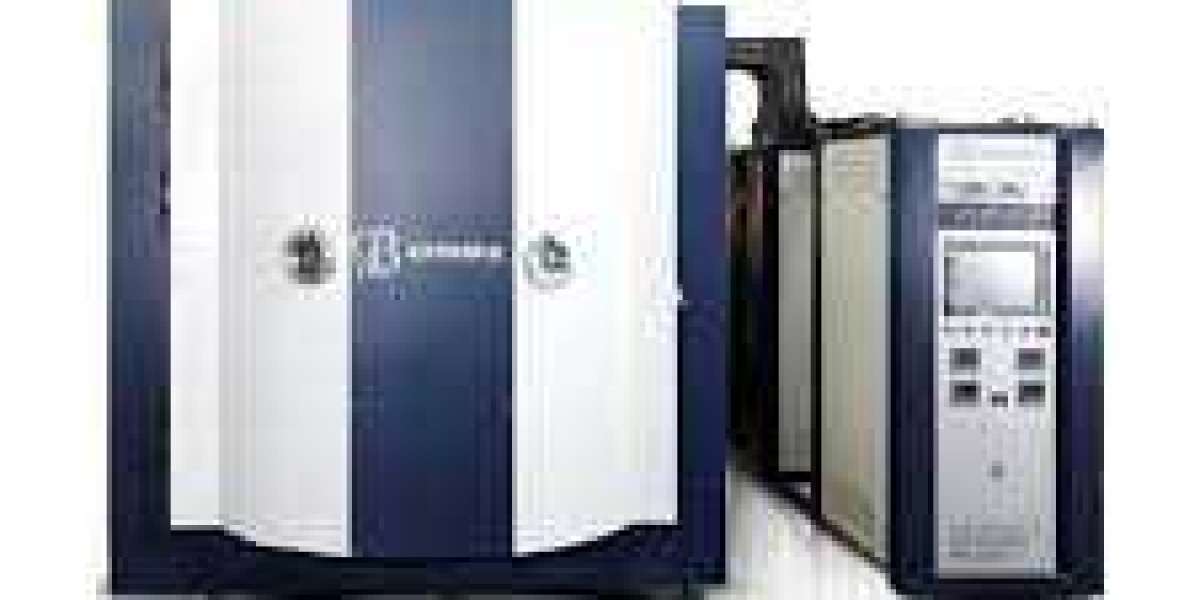

A sputtering system that costs less on the purchase order can cost considerably more across a production year, and the difference often traces to a single number that rarely appears in a quotation: target utilization. Buyers comparing PVD magnetron sputtering coating equipment tend to focus on chamber size, pump configuration, and deposition rate, yet the proportion of target material that actually reaches the substrate determines how often the chamber opens for target changes, how much material is purchased and discarded, and how much production time is lost to maintenance. Gold Blingking Intelligent Technology (Zhe Jiang) Co., Ltd. builds magnetron sputtering systems from its facility in Zhejiang, and jbczn publishes technical information on equipment configurations for buyers evaluating these trade-offs. How does target utilization actually translate into operating cost over the life of a system?
The physics behind the number explains why utilization varies between designs. Magnetron sputtering erodes the target along a confined path where the magnetic field concentrates the plasma, and the material outside that path remains largely untouched when the target reaches end of life. A planar target with a fixed magnet assembly may consume only a modest fraction of its material before replacement, while a rotatable target or a design with moving magnets spreads erosion across a larger area and leaves less unused material behind. Research on sputtering economics describes planar target utilization figures that can sit in the range where a substantial portion of the purchased material becomes scrap, while rotatable designs reach considerably higher utilization rates by distributing the erosion pattern. The cost consequence is straightforward: a target that yields less usable material per purchase raises the effective price of every micron of film deposited.-9The maintenance dimension compounds the material cost. Target changes require the chamber to open, the system to cool, and the vacuum to be re-established, and each of these steps removes the system from production. A design that reaches higher utilization extends the interval between target changes, and that interval translates directly into available production hours. A system running at modest utilization may require target replacement on a schedule that interrupts production frequently, while a design that consumes its target more completely allows longer campaigns between maintenance events. For a manufacturer running multiple shifts, the difference in uptime can outweigh the difference in target material cost, because lost production hours carry their own cost in delayed orders and underused labor.
The choice of target format interacts with the application in ways buyers should evaluate carefully. Rotatable targets offer utilization advantages but carry a higher price per unit volume than planar targets, and the economics depend on the material being deposited. For an inexpensive target material, the savings from higher utilization may be modest in absolute terms, while for a precious metal or a specialized alloy, the material cost difference becomes significant quickly. Buyers should also consider the deposition rate and power density that each target format supports, because a design that improves utilization but limits power density may reduce throughput in a way that offsets the material savings. The correct balance depends on the product mix, the production volume, and the value of the material being consumed.-9Reactive sputtering introduces another layer of cost that interacts with utilization. When a metallic target is sputtered in the presence of oxygen or nitrogen to form a compound film, the target surface can become partially covered with the compound, and that coverage reduces the sputtering yield. A process run in the poisoned mode deposits slowly and consumes target material inefficiently, while a process controlled near the transition mode achieves higher rates but demands careful feedback control to remain stable. The equipment's control system and the supplier's process support determine how reliably a buyer can operate near the productive region without drifting into a mode that wastes material and time. Gold Blingking supplies magnetron sputtering equipment alongside multi-arc systems and coating services, and its experience running its own coating lines informs how its systems are configured for stable operation.
Buyers evaluating a purchase can build a simple cost model that captures these factors rather than relying on the quotation alone. The model should include the target price and the utilization rate to derive an effective material cost per unit of deposited film, the expected production hours between target changes, the labor and downtime cost of each maintenance event, and the throughput the system delivers at the intended process parameters. Suppliers who can provide utilization data and maintenance interval estimates support this exercise, while suppliers who cannot leave the buyer estimating without evidence. The magnetron sputtering equipment range at https://www.jbczn.net sets out system configurations that buyers can match against their production requirements before requesting a detailed cost discussion. Does your evaluation of PVD magnetron sputtering coating equipment include the numbers that determine what the system costs to run?