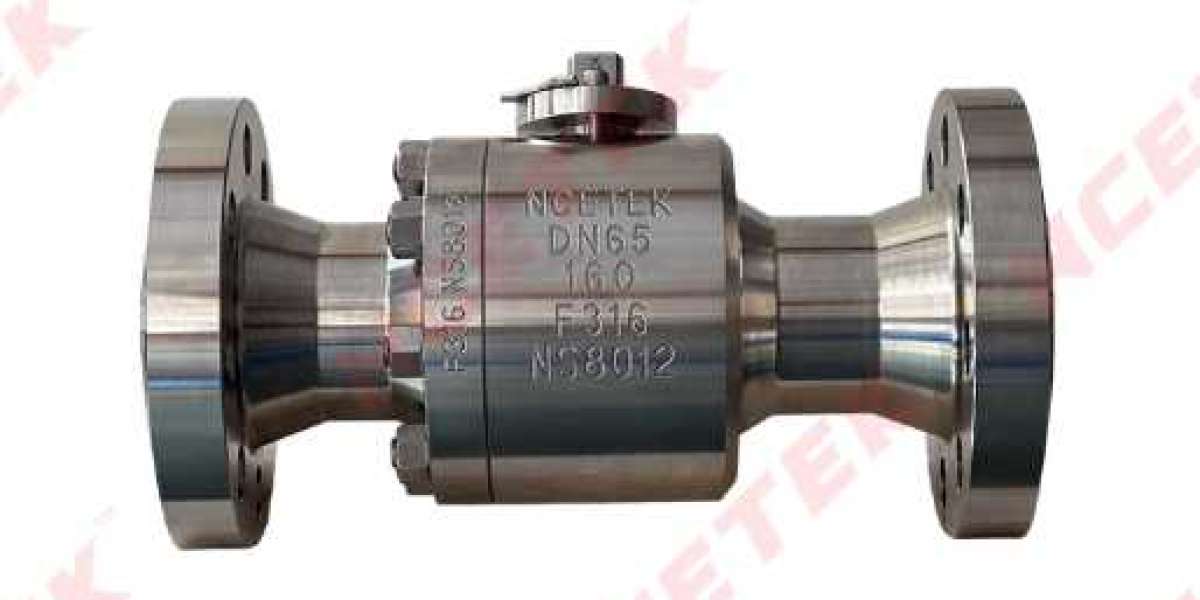

Industrial pipelines require shutoff equipment that can provide controlled isolation while maintaining structural integrity under changing operating conditions. A Cast Steel Floating Ball Valve combines a cast steel body with a floating ball mechanism, creating a configuration suited to many general and process pipeline applications. Its performance depends on the interaction between body construction, ball and seat geometry, material selection, machining accuracy, sealing components, and operating conditions rather than on the body material alone.
Cast steel is commonly considered when manufacturers need a valve body with appropriate mechanical strength and practical production characteristics for industrial applications. The casting process allows manufacturers to produce complex body geometries while accommodating different connection arrangements and internal passages. After casting, critical surfaces require machining to achieve the dimensional accuracy needed for assembly. Inspection of the casting is also important because internal or surface defects can affect the mechanical integrity of the finished component.
The floating ball mechanism operates differently from a trunnion-supported configuration. Instead of being fixed by a lower support, the ball is allowed to move slightly under line pressure. This movement can help the ball establish contact with the downstream seat and support shutoff performance. Because the ball-seat relationship is central to operation, the dimensions and surface finish of both components must be carefully controlled during manufacturing.
Seat selection should reflect the actual service environment. Different process media, temperatures, pressures, and operating cycles can require different sealing materials and configurations. The seat must provide suitable contact with the ball while allowing the valve to open and close without excessive resistance. Chemical compatibility is also important because the process medium can influence the long-term condition of polymeric or elastomeric sealing components.
Machining accuracy has a direct effect on valve assembly. The body cavity, seat pockets, stem interface, ball surface, and connection areas should be manufactured according to controlled tolerances. A properly finished ball can provide a consistent contact surface, while accurate stem machining supports smooth transmission of operating torque. Manufacturing consistency becomes especially important when valves are produced in different sizes for a common industrial project.
Pressure and leakage testing form an important part of quality control. Before shipment, the completed valve can undergo appropriate inspection and testing based on project specifications and applicable standards. Body testing helps verify structural integrity under controlled conditions, while closure testing evaluates the sealing function. Operational testing can also confirm that the stem, ball, and seats interact correctly throughout the opening and closing cycle.
The external pipeline connection should be considered together with the internal valve structure. Depending on the installation, valves may use flanged, threaded, or welded connection arrangements. Correct connection selection helps integrate the valve into the surrounding piping system and can influence installation, inspection, and future maintenance. Valve orientation and accessibility should also be reviewed during project planning.
Applications can range from water treatment and industrial utilities to chemical processing, energy systems, and general process pipelines. Each application presents different requirements for material compatibility, temperature management, pressure control, and maintenance. A valve intended for clean utility water may face very different conditions from one installed in a process line containing aggressive chemicals or elevated-temperature media.
Maintenance planning should include inspection of external connections, operating mechanisms, sealing areas, and actuator components where applicable. Proper installation and suitable operating practices can help limit unnecessary mechanical stress. When maintenance is required, access to relevant components and accurate equipment documentation can simplify inspection and replacement procedures.
For industrial flow control projects, Cast Steel Floating Ball Valve selection should be based on the complete operating environment rather than body material alone. A coordinated approach to casting, machining, sealing selection, assembly, and testing helps create a valve configuration suited to its intended service. Industrial valve configurations and application options can be reviewed at https://www.ncevalve.com/product/ when evaluating solutions for pipeline flow isolation.